

A merger or a change of direction is one of the rare moments a company can choose it. Three key points decide whether that moment is used or wasted.
The moment usually arrives quietly. A board approves a merger. Or a leadership team admits, often after years of saying otherwise, that the business has outgrown its name. Either way, something rare has just happened. For the first time in a generation, the company can choose what it is called.
Most companies get that chance once or twice in their lifetime. Few decisions they make that year will last longer. Campaigns end. Websites are rebuilt. Strategies are rewritten every few years. The name stays. It goes on every contract, every invoice and every email signature. It is said aloud in boardrooms, on trading floors and at the reception desk, millions of times over. Long after the people who chose it have moved on, it is still doing its job, or failing to.
That is what makes the moment so valuable. It is also what makes it so easy to waste.
A new name is the one brand decision a company can’t quietly undo. It deserves the same rigour as the deal or the strategy behind it.
The opportunity tends to arrive in one of two ways. The first is a merger or acquisition. Two businesses, each with its own history and its own reputation, are about to become one. The new company is bigger than either of them, and often different from both. The second is a change of direction. The business has moved into new markets, new services or new ambitions, and its name is still describing the company it used to be.
Thomson-CSF was a good example of the second. The French group had grown far beyond its roots as a defence electronics company, yet around six hundred other businesses shared the Thomson name. It was a name the group could never fully own, attached to a description it had already left behind. It became Thales, a name it could build and protect as its own in every market it served. Its chairman summed up the reason in a sentence. The company, he said, had changed significantly since the days when it was known simply as a French defence company.
In both cases the name becomes the first public signal of what the company now stands for. Staff see it before customers do. Investors read it before they read the strategy. Competitors notice it before anything else changes. Get it right and the name carries the new story for decades. Get it wrong and it becomes a distraction the business has to explain.
We have spent more than thirty years helping companies through that moment. Banks. Telecoms operators. Leasing and mobility groups. Industrial businesses that nobody outside their sector has heard of, and that everyone inside it knows. What we have learned is that the hardest part of naming rarely happens at the whiteboard. It happens before the first name is ever written down.
Too many companies treat the name as a task near the end of the plan. One study of more than two hundred large mergers found that brand was treated as a low or moderate priority in almost two thirds of the negotiations. The default answers tend to follow. Keep one name. Bolt the two together. Or fall back on initials, which feel neutral and offend nobody. They also tend to mean nothing. The latest Brand Names Report, which tracks how audiences react to new and changed names, found abbreviations consistently scored worst of any type of name.
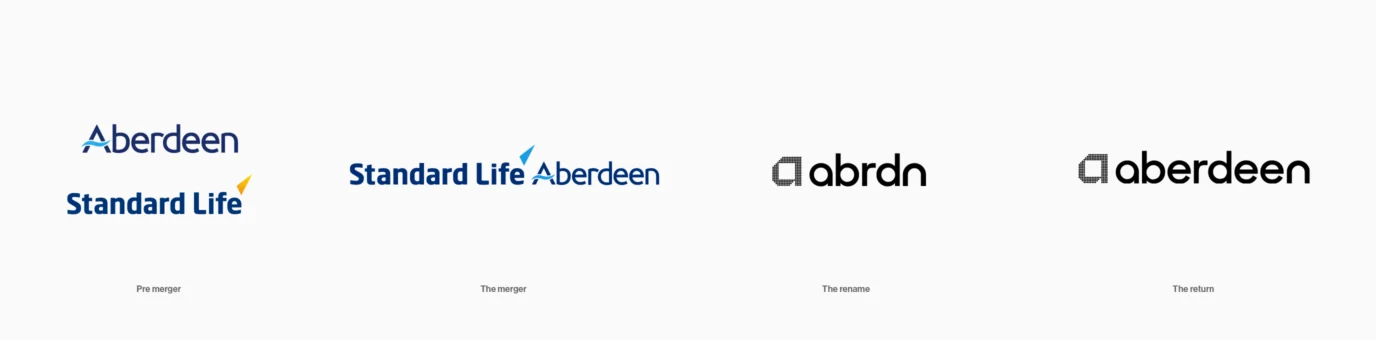
The cost of a weak choice can take years to show. Standard Life and Aberdeen Asset Management merged under a combined name that told the market very little. The group later renamed itself abrdn, without the vowels, and eventually went back to Aberdeen. Its chief executive explained the final change in one line. ‘Talking about the name was a distraction.’
The companies that get it right start somewhere else. They don’t begin with names. They begin with three key points. We work through them at the start of every naming programme we run, usually before anyone in the room has suggested a single word.
Know what the company is for now
Not what the business was. Not what the two merging companies were. What the company will be in ten years’ time, and what it needs the world to believe about it.
It sounds obvious. In practice it is the point most often skipped. A name chosen without a clear answer becomes a compromise, and compromises are expensive to live with. A name chosen with one has something to aim at.
Ayvens is a good recent example. When ALD Automotive bought LeasePlan, both were respected names in vehicle leasing. Both, in the words of the chief executive, were ‘viewed as traditional leasing and fleet management companies’. The combined business wanted to be something more than that. So rather than keep either name, it created a new one. The name followed the strategy. Not the other way round.
Sometimes the answer points somewhere quieter. When Fiat Chrysler and PSA came together, the new group took the name Stellantis, from the Latin for ‘to brighten with stars’. It was never meant to sit on a car. It works at group level, above fourteen brands that each keep their own names and their own customers. The company was a group that owns great brands, and the name said exactly that.

We learned the limits of naming early, during the race for 3G. Governments across Europe were auctioning mobile licences, and operators were paying sums that would have seemed absurd only months before. Germany’s auction alone raised around €50 billion. Telefónica and Sonera formed a joint venture and paid roughly €8.4 billion for one of its licences. They had a licence, a network plan and an ambition to take on the established operators. What they needed was a brand.
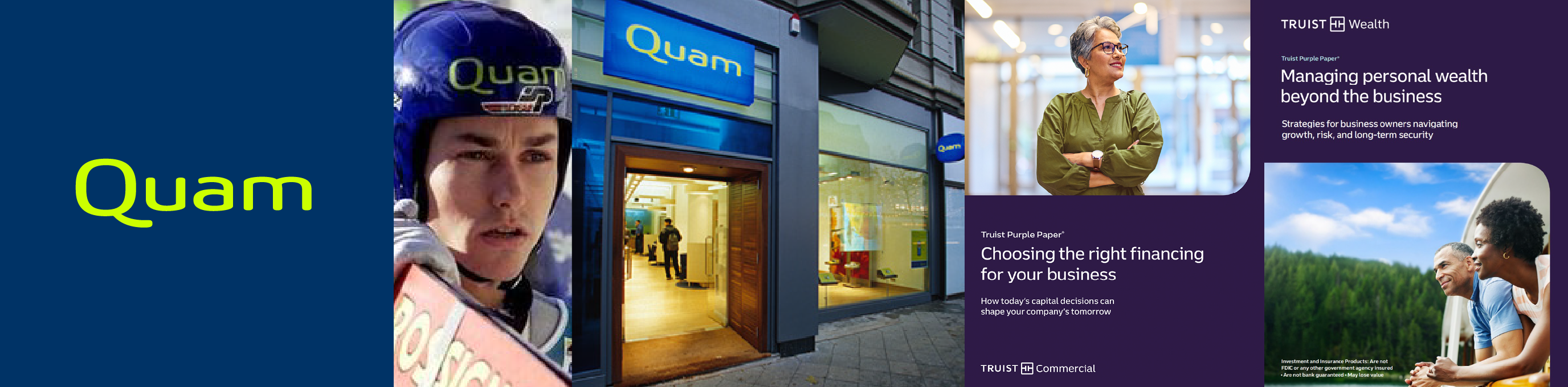
Members of our team helped create it. The name was Quam. It was short, Latin and unlike anything else in German telecoms. The brand was positioned on quality and service rather than the cheapest minutes, with premium city-centre stores that served coffee to customers. For a while everyone in Germany was talking about it. Then the 3G handsets failed to arrive, rival networks were slow to connect calls and the licence economics fell apart. The brand had done its job. The business never had the chance to do its own.
A name can express a strategy. It cannot rescue one.
That is why our naming work starts with positioning, not vocabulary. We agree the territories the company wants to own before we explore a single word. Then we write a naming brief. It sets out what the name must convey, who will meet it and in what frame of mind, which names it will sit beside, what is in bounds and what is not. Every decision maker signs up to it before the creative work begins. It is a short document. It saves months.
It also gives us a simple test for every candidate. If the rationale behind a name takes more than one sentence to explain, the name is probably wrong.
Know who has to believe in the name first
Most naming briefs start with the customer. In a merger or a repositioning, the customer is rarely the first audience. The first audience is the company’s own people, and they meet the new name on the morning it is announced. Regulators, shareholders and partners follow close behind. The market comes last.
That order matters, because a new name is personal. The chief executive of Ayvens put it plainly. ‘How you react to a new name … it’s a very personal thing.’ His business moved its people across to the new name country by country, as local systems and contracts caught up. Aviva did something similar on a longer timescale. When the insurer adopted its new name, strong local businesses kept their own names for years, each marked as ‘an Aviva company’. Staff and customers were given time to make the journey. The name was earned before it was imposed.
It also explains why outside noise matters less than boards fear. When BB&T and SunTrust named their merged bank Truist, the press mocked it for weeks. More than 96 per cent of the shares voted backed it anyway. The people who had to live with the name understood why it existed. A name the inside resents will be undermined long before a customer sees it. A name the inside understands can survive almost any headline.
So we build agreement step by step, never all at once. The studio generates widely, but the client sees a tightly curated set of names, presented over several rounds. Each round teaches us something about what the board responds to and why. By the final round, the decision feels earned rather than imposed.
We are wary of instant consensus. When a room falls in love with a name in the first five minutes, it is usually because the name feels familiar. Familiar names are comfortable, and comfortable names are usually taken or forgettable. Research has its place too. It is excellent at spotting problems, but it should never decide alone. Audiences often reject the unexpected names that go on to become great brands.
Finally, every name has to survive being said out loud. In a boardroom. On a conference call. At a reception desk in Riyadh and in London. A name that people hesitate to say is a name they will avoid saying, and a name that isn’t said is quickly forgotten.
Make sure you can own it everywhere you intend to go
This is the point that ends more shortlists than any other. The obvious words were registered years ago. A merged or repositioned company is usually bigger and more ambitious than the business that came before it, so it needs protection in more countries and more trademark classes than ever. A name that clears at home can be blocked three borders away.
No name is born international. It has to be built that way. The useful question is not whether a name will work everywhere, but where it needs to go first, second and third. A merged group rarely needs a name for every country on earth. It needs one that works in the markets it will trade in over the next five years, and that can travel further when the business does.
That itinerary shapes everything that follows. It decides which scripts the name must sit in, which registers it must clear and which cultures must feel respected by it. In the Gulf it usually means English and Arabic side by side, and a decision many boards leave far too late. Should the Arabic name transliterate the English, translate its meaning, or be written for Arabic speakers in its own right? Each route sends a different signal to the home market, and each plays out differently on the register.
Done well, the two languages become an advantage. A merged company can carry a new English name to international investors while keeping a heritage Arabic name for its home market. One looks outward. The other reassures customers who have trusted the old name for decades. It is a quiet piece of craft, and it only works when someone raises this point early.
This is where much of our time goes, though clients rarely see it. Every candidate is screened against the international trademark database and the regional registers for each market the brand will enter. We check domains and social handles. Native speakers are part of the process from the brief onwards, not a final check. They help set the criteria, contribute names from their own cultural references and test every candidate for meaning and sound. Where an Arabic-rooted name is the right answer, we build it from genuine roots and patterns, not dictionary words that a competitor already owns.
Knowing a name’s meanings before launch also gives a company the power to choose how it is introduced. A name that is tricky to say in one market can be managed with confidence. It only becomes a problem when it arrives as a surprise.
Only when that work is done does a name reach the board. Final clearance and registration sit with the client’s own trademark counsel, as they should. But by the time a name reaches them, the shortlist should already be sound. We would rather present ten names we believe in than a hundred we can’t defend.
None of these points mentions a single name. That is deliberate. A board that is clear on all three has already done the hardest part of naming. The creative work that follows is still demanding, but it finally has something to aim at.
That creative work is where the studio comes alive. We explore real words, compounds, coined names and constructions from Arabic and Latin roots. We draw on history, science, language and the company’s own story. We test how each name sounds, how it looks and how it feels to say. Every name we present has been chosen by specialists who understand the brief, the market and the language.
We see language as one of the most powerful tools a brand will ever have. It builds the brand and gives it order. It carries the brand’s voice and vision to everyone it meets. Every sentence a company writes depends on it. A name is where that language begins, and it is the one word every other word will lean on.
Good naming takes months, not an afternoon. For a large international company emerging from a merger or a change of direction, two to four months is typical. That time covers brand strategy, linguistic checks in every key language and trademark screening across each market, as well as the creative search itself. The companies that give it that time tend to end up with a name they never need to change.
Our naming programme is built around those three points. It has guided banks, telecoms operators, mobility groups and industrial businesses through mergers, acquisitions and changes of direction. It begins with a working session with your leadership team, where we agree what the company is for and what the name must do. From there we write the naming brief and map the creative territories. The studio generates widely, then presents a curated shortlist over several rounds. Every name is screened across your markets and checked by native linguists in English and Arabic.
You come away with a name your board believes in. You also get a rationale your people can repeat, and a shortlist your trademark counsel can clear with confidence.
Because naming sits inside our wider brand practice, the work doesn’t stop at the name. The same team can carry it through into identity, voice and launch, so the new company arrives as one brand from the first day.
If your business is approaching a merger, an acquisition or a change of direction, the best time to start is before the deal closes. Talk to us about a naming programme at atelier@jamesbranding.com. The earlier the conversation begins, the more options stay open.
Image Credits: Encon, Stellantis, Thales, Aviva, LeasePlan, Ayvens, aberdeen group, Quam, Truist. All trade marks are the property of their respective owners.
